Addressing the Roots of Climate Change: The Impact of Extractive Industries
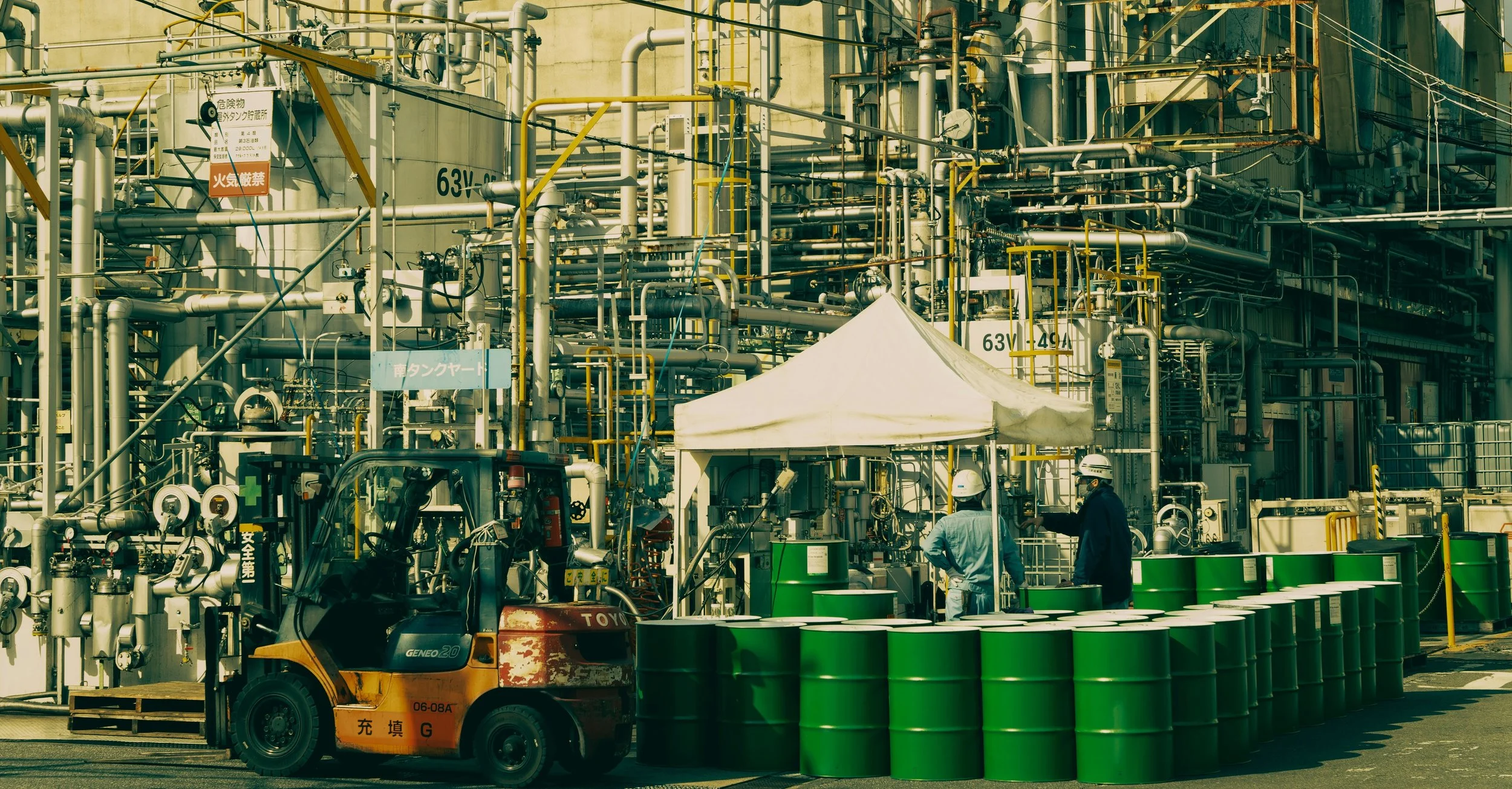
Revisiting Catholic Climate Covenant’s 2018 webinar on climate change and extractivism, what strikes us most is how urgent its message still is. The conversation anticipates the vision of integral ecology that Pope Francis later gave us in Laudato Si' (2015) and Laudate Deum (2023), and it echoes the Amazon Synod's (2019) call to protect both creation and the Indigenous peoples who care for it. Today, as Pope Leo XIV continues to call the Church toward care for creation, human dignity, and an economy that serves the common good, this discussion is still a valuable resource for understanding what's really at stake in our environmental crisis: not just the science, but the moral and human dimensions too.
1. The Extractivist Model
We often talk about climate change in terms of carbon emissions and rising temperatures. This webinar pushes us to look deeper, to the global extractivist model of development that drives so much of the crisis in the first place. When coal, oil, gas, and minerals are pulled from the earth on a massive scale for short-term profit, the people and places closest to that extraction are usually the ones who pay the price.
Marianne Comfort, justice coordinator for Earth, racism, and women at the Sisters of Mercy of the Americas, describes extractivism as a mindset - one that puts aggressive resource extraction ahead of long-term ecological and human well-being. Pope Francis was direct about what this means in practice: real progress on climate change means moving beyond this model, including leaving fossil fuels in the ground.
Sister Joan Brown, co-founder of New Mexico Interfaith Power & Light, brings this home to the United States. She calls New Mexico a "sacrifice zone," a place where oil, gas, uranium, and nuclear development fall disproportionately on Hispanic and Indigenous communities. A few of the concerns she raises:
Methane pollution. New Mexico is home to the nation's largest methane hotspot, driven largely by oil and gas venting and flaring.
Water scarcity. Hydraulic fracturing draws millions of gallons of water in a region that can't spare it.
Economic inequality. Even in resource-rich areas, many local communities are still waiting for the investment and opportunity that wealth was supposed to bring.
2. The Amazon: An Integrated Crisis
The story looks different, but no less urgent, in Latin America. Fr. Peter Hughes of the Missionary Society of St. Columban describes the Amazon Basin as facing an integrated crisis - rainforest destruction and the exclusion of Indigenous peoples aren't two separate problems, but one. With roughly 20% of the Amazon already lost, the region's ability to regulate climate and water cycles for the whole planet is under real threat. Fr. Hughes sees the Amazon Synod as a moment of opportunity for the Church: a chance to promote ecological conversion and stand up for the rights of more than 400 Indigenous peoples.
In 2020, following the Synod, Pope Francis carried these priorities forward in Querida Amazonia (Beloved Amazon), calling for the protection of the rainforest, the defense of Indigenous communities, greater lay participation in the Church, and genuine respect for local cultures.
3. A Path Forward: Faith and Action
Meeting this moment takes more than new technology. It takes a real shift in how we see our relationship to creation and to each other. The panelists offer a few concrete ways to start:
Pray and reflect using resources like the Jesuit Ecological Examen.
Support local efforts that oppose harmful extractive projects and push for a just transition to renewable energy.
Embrace integral ecology — recognizing that environmental protection, human rights, and poverty are bound together, and letting that understanding shape policies that put people and the planet ahead of profit.
We invite you to watch the full conversation and sit with what it's asking of us.