
Battery Storage: A Next Step in Energy Stewardship
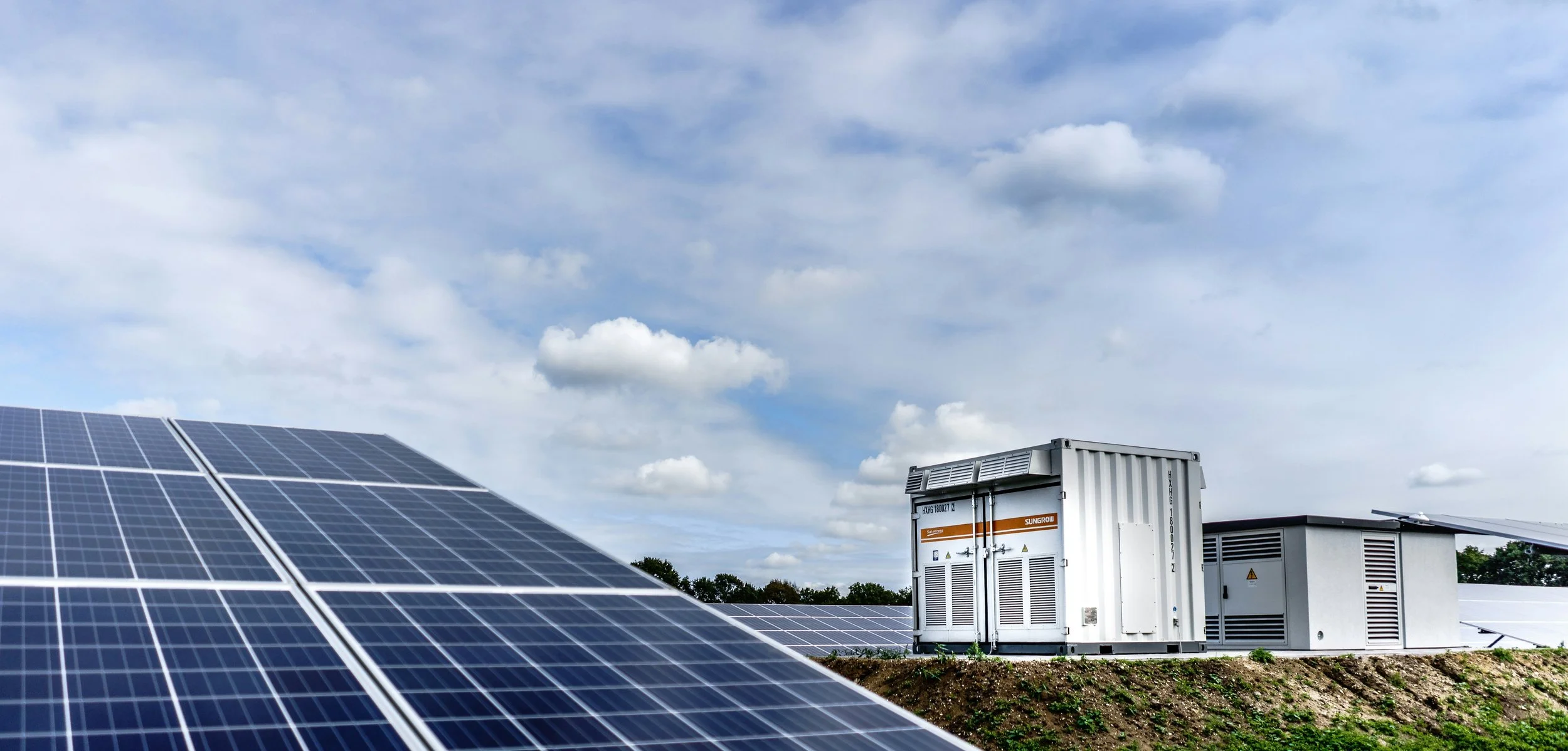
If you've spent any time thinking about your parish, school, religious order, or diocese's energy future, you've probably heard the term "battery storage" come up more and more. It's not just a buzzword. Battery Energy Storage Systems, or BESS, are quickly becoming one of the most practical tools available to Catholic institutions looking to control costs, strengthen resilience, and steward their resources well.
Here's what you need to know:
1. What Is a Battery Energy Storage System?
At its core, a BESS is exactly what it sounds like: a large battery system that stores electricity so it can be used later. Energy comes in — from the grid, from solar panels, from wherever it's generated — and instead of being used the moment it arrives, some or all of it is banked for when it's needed most. Think of it as a savings account for energy. You deposit power when it's abundant or cheap, and you draw on it when demand rises, when prices spike, or when the grid goes down altogether.
2. Why Battery Storage Is Growing So Fast
A few years ago, battery storage was mostly a conversation for large utilities and cutting-edge tech companies. That's changed. Battery costs have dropped significantly, the technology has matured, and more financial incentives are now available to help offset the upfront investment. At the same time, our electric grid is under growing strain — from extreme weather, from aging infrastructure, from rising demand — and institutions of every kind are looking for ways to protect themselves from that uncertainty. Put simply, storage has moved from "nice to have" to a serious, mainstream option for organizations that want more control over their energy future.
3. How BESS Complements Solar — and Stands on Its Own
For institutions that already have solar panels, battery storage is a natural next step. Solar only generates power when the sun is shining, but a parish's needs don't stop at sundown. Pair solar with storage, and suddenly that midday surplus doesn't go to waste. It's banked and ready for evening Masses, weekend events, or the earliest hours of the morning before the sun is back up. It's a way of making every bit of that solar investment go further.
But here's something worth pausing on: you don't need solar panels to benefit from battery storage. On its own, a BESS can still charge from the grid during off-peak hours, when electricity is cheaper, and discharge during peak hours, when rates climb. It can also serve as a source of backup power during outages, keeping essential operations running when the grid can't. For institutions not yet ready to invest in solar, storage alone can still be a meaningful step toward smarter, more resilient energy stewardship.
4. Batteries Can Earn Their Keep, Too
Savings and backup power aren't the only payoff. In many markets, utilities and grid operators will pay institutions to keep a battery ready to help when the grid is under stress — programs often called demand response, or grid services. Enroll, and you get paid simply for being available during peak-demand events, with extra payments if you're actually called on to discharge. Some markets also offer frequency regulation, capacity payments, and where demand charges are a big piece of the bill, a battery discharging at the right moments can cut those costs every month.
None of this requires changing daily operations — the battery's software handles the timing. It just means a BESS isn't only insurance against outages or a way to stretch solar further; it can also become a revenue stream that helps pay for itself.
In addition, batteries are still eligible for the Investment Tax Credit.
5. A Growing Focus on Resilience, Savings, and Sustainability
For Catholic institutions, this conversation touches something deeper than dollars and cents - though the savings are real and worth pursuing. It's about being able to keep the lights on during a storm so a shelter can still open its doors. It's about freeing up the budget from utility bills so more can go toward ministry. It's about faithful stewardship of the resources entrusted to us, including the energy we use every day.
As more institutions weigh their options, battery storage is emerging as a practical answer to three questions we hear again and again:
How do we protect our ministry from disruption?
How do we make our budget go further?
How do we care for creation while we do it?
Deferred maintenance and stretched budgets can make it feel like there's no room to think about the future. But with the right plan — and the right partner — battery storage can be a realistic, achievable part of your energy strategy, not a distant dream.
Ready to explore what battery storage could look like for your institution? Let's start the conversation.